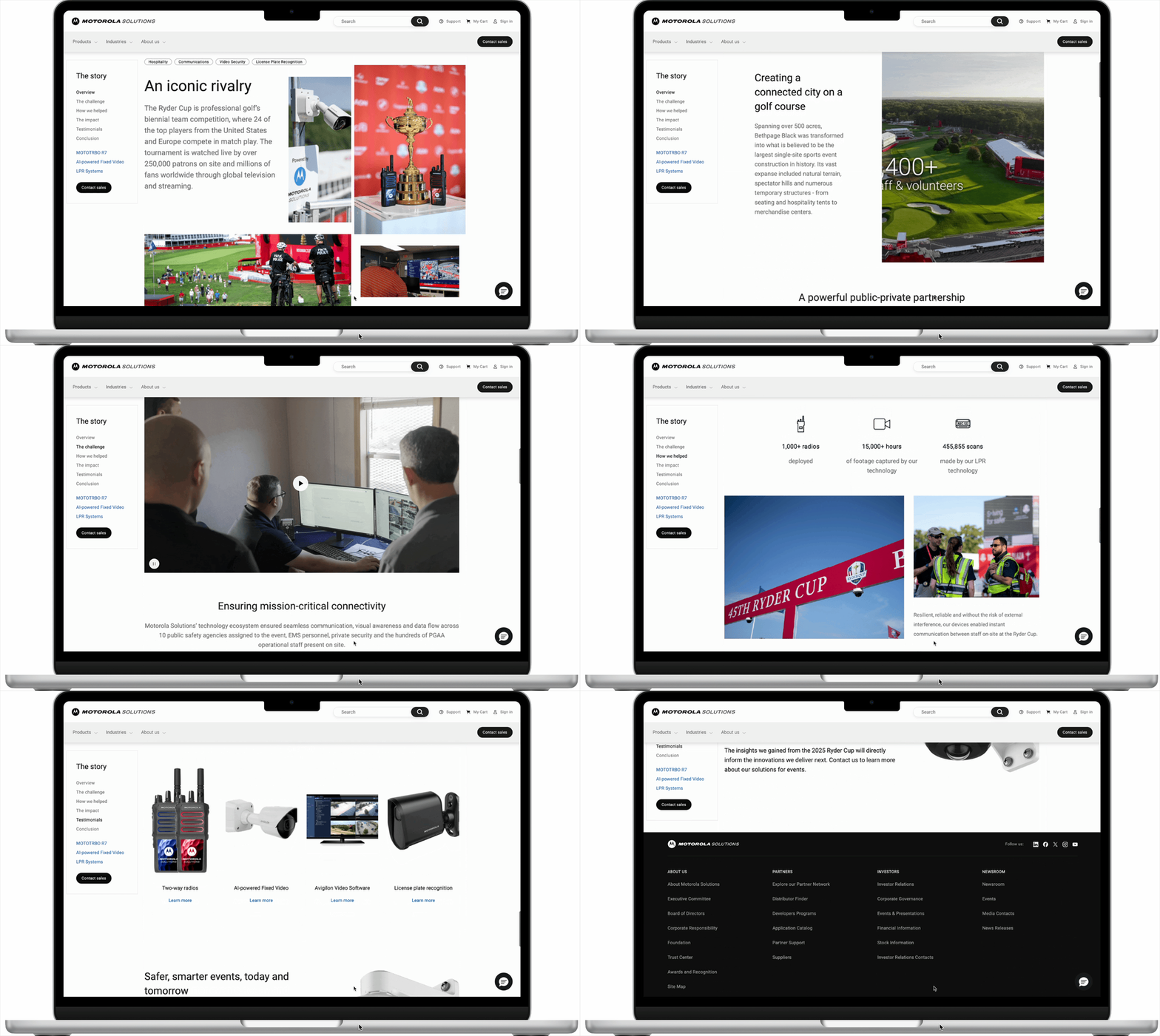
Transforming static PDFs into dynamic stories

Context:
Motorola Solutions has decades of great success stories, but they were stuck in old PDFs and scattered across disconnected web pages. This made it hard for customers to find them or, most importantly, for the business to buy products that actually solved their problems.
Role
Lead product designer, UX architect
Core focus
Template architecture, Content strategy, Stakeholder enablement
Stakeholders
Global marketing, Strategy, Communications, Brand, and Dev team
Challenge
As the sole designer, I was tasked with launching a new storytelling framework from scratch on a tight deadline. I had to navigate limited engineering resources and a lack of prior research, all while the project’s long-term strategy was still being defined.
Discovery
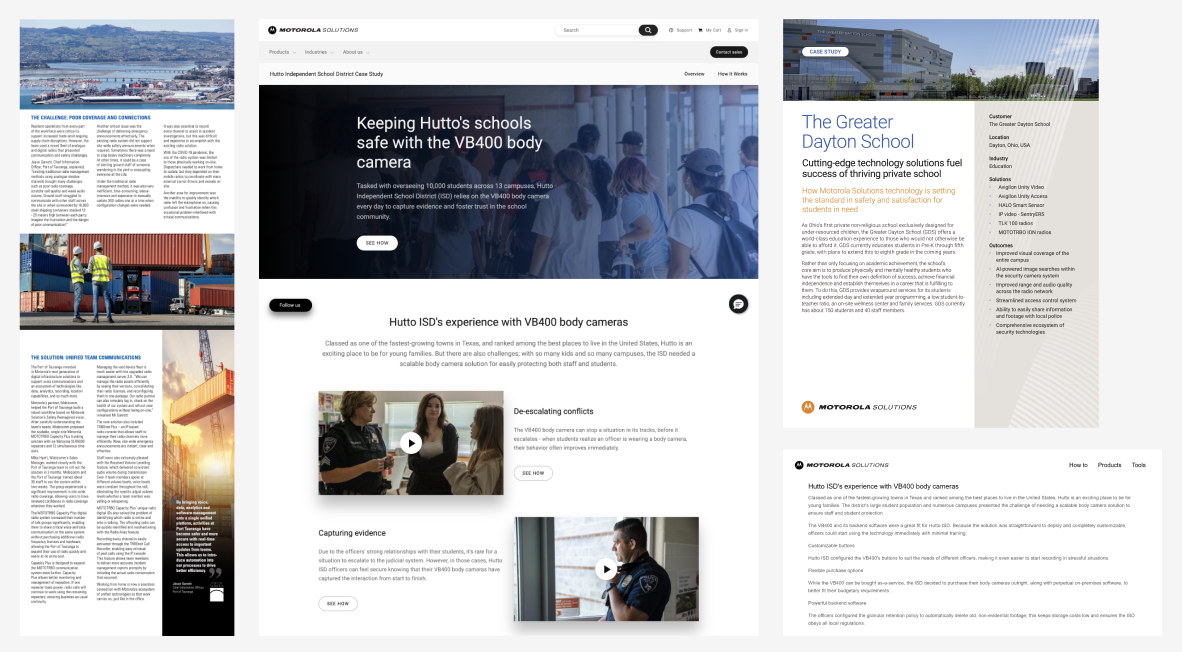
To look at the data and align our priorities, I facilitated a workshop with the Global Marketing, Strategy, and Analytics teams. We defined shared goals: making our success stories easier to find through organic search and ensuring they led users directly to the relevant product pages.
Competitive analysis
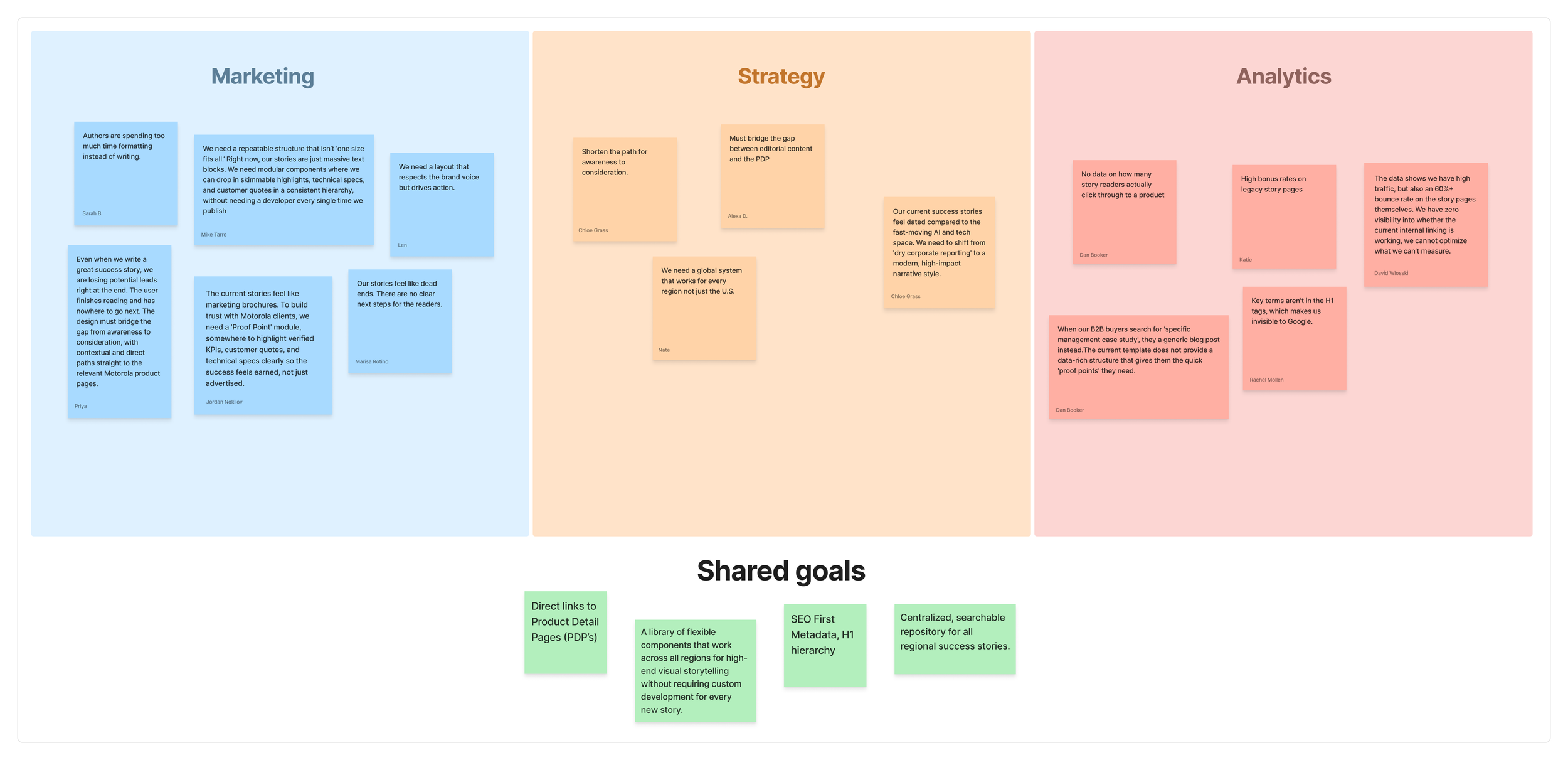
To find the best structure and ensure my decisions were data-driven, I audited Salesforce, IBM, and Cisco alongside Baymard research. I focused on intuitive filtering and a transition to product pages that felt like an organic next step rather than a hard sell.
Ideation & architecture
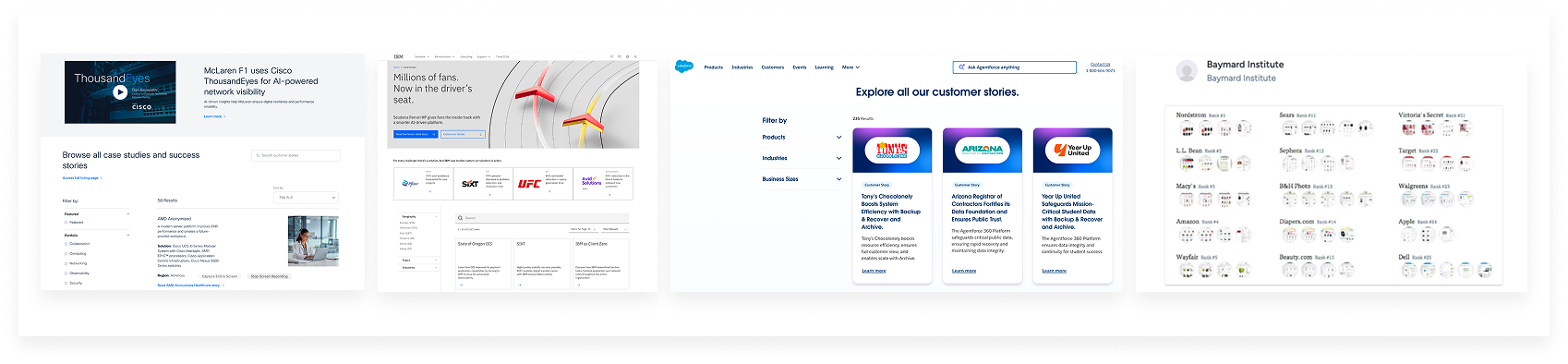
I focused on two things: a searchable central hub for both new and legacy stories, and a template that guides readers toward a purchase. To ensure my designs were actually doable within our tight timeframe, I vetted the ideas with my developers from the start.
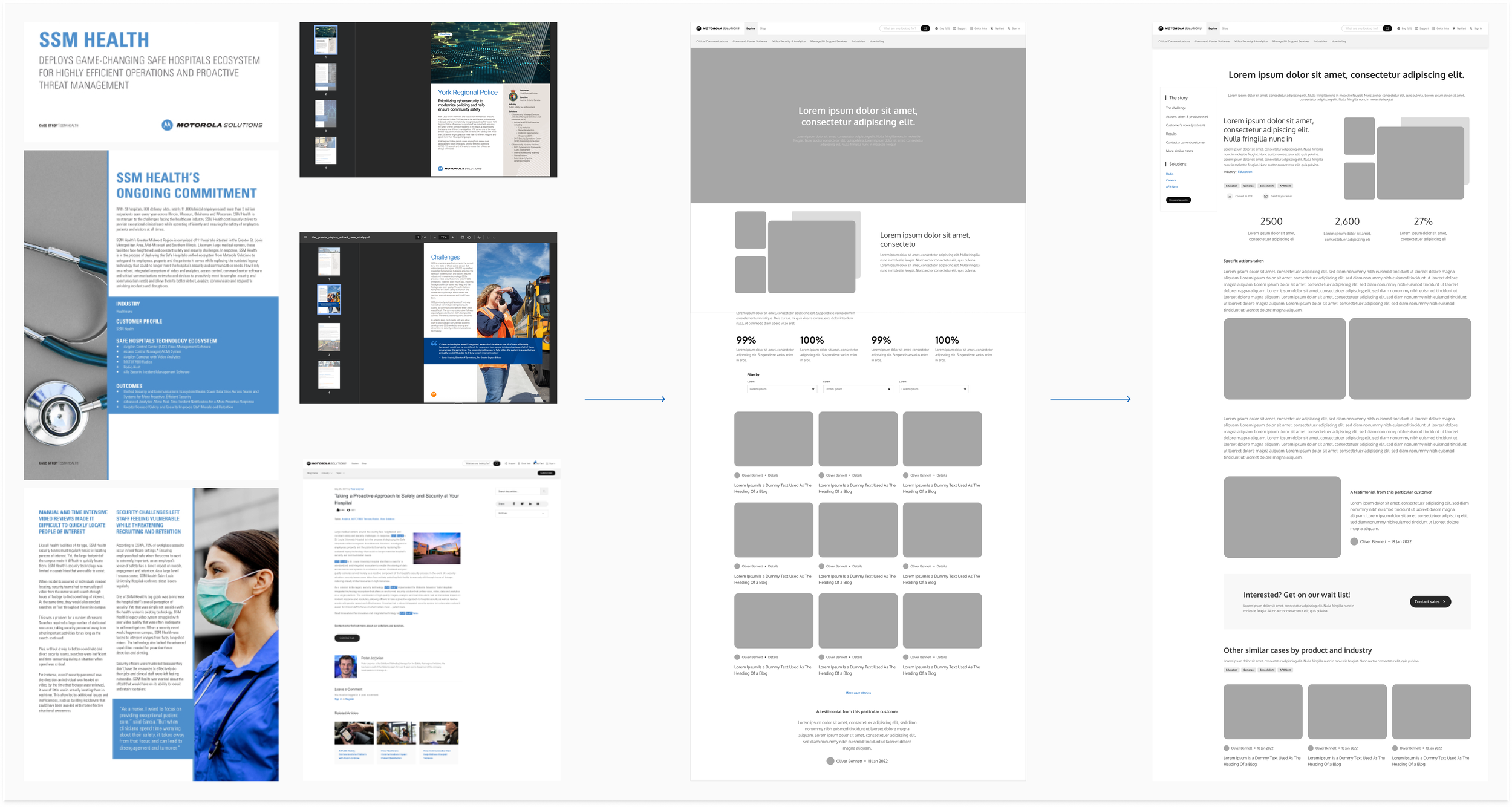
Usability testing
I tested the prototype with internal stakeholders and actual Motorola clients to validate the flow and watch how they interacted with the template. It helped me to refine the navigation and ensured the transition to product pages felt intuitive.
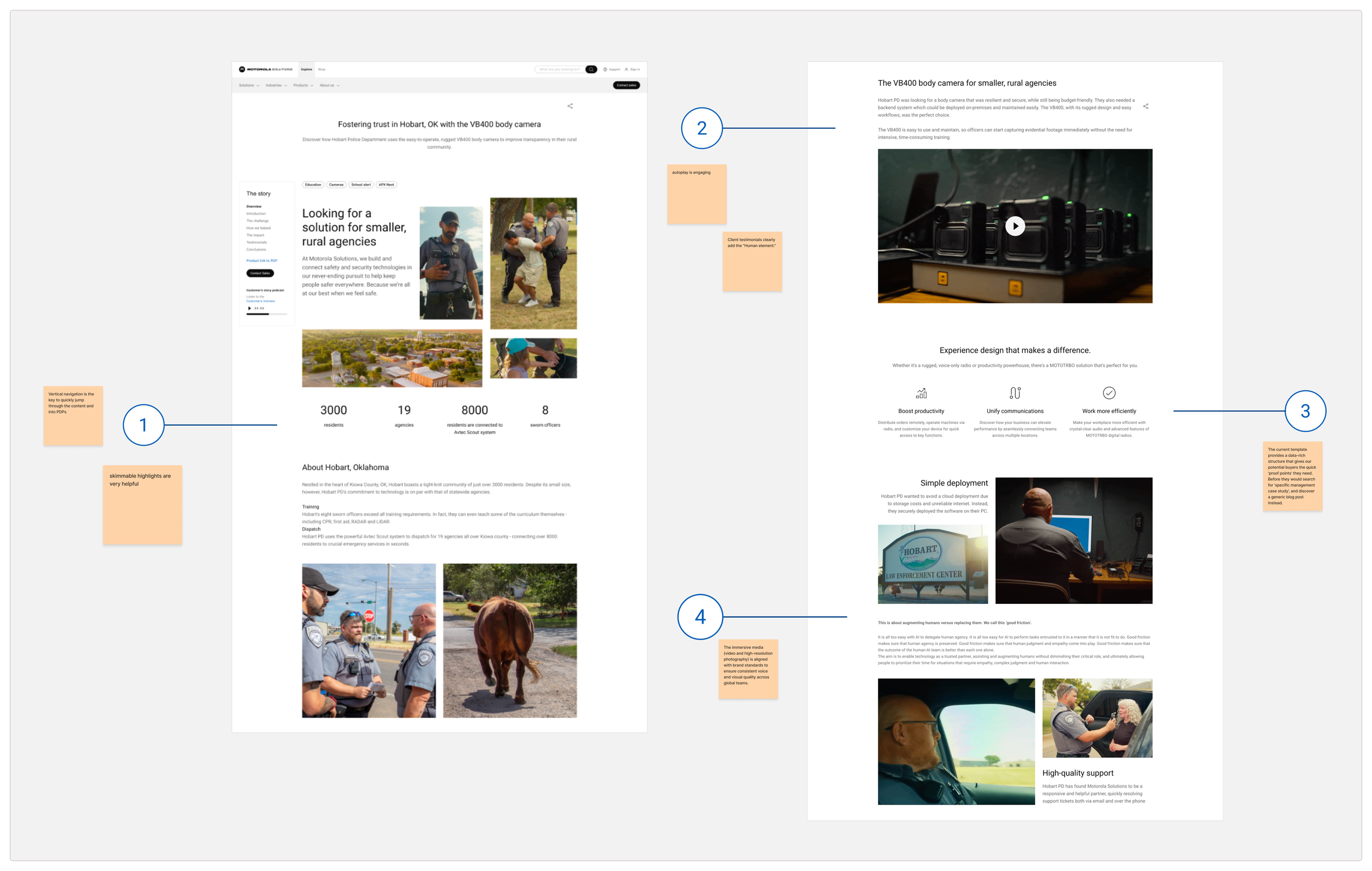
Insights
Testing showed that writers needed a bit more help transitioning to the new format. I created a step-by-step writing guide to simplify the process, ensuring every story was consistent, SEO-friendly, on-brand, and easy for any team to launch.
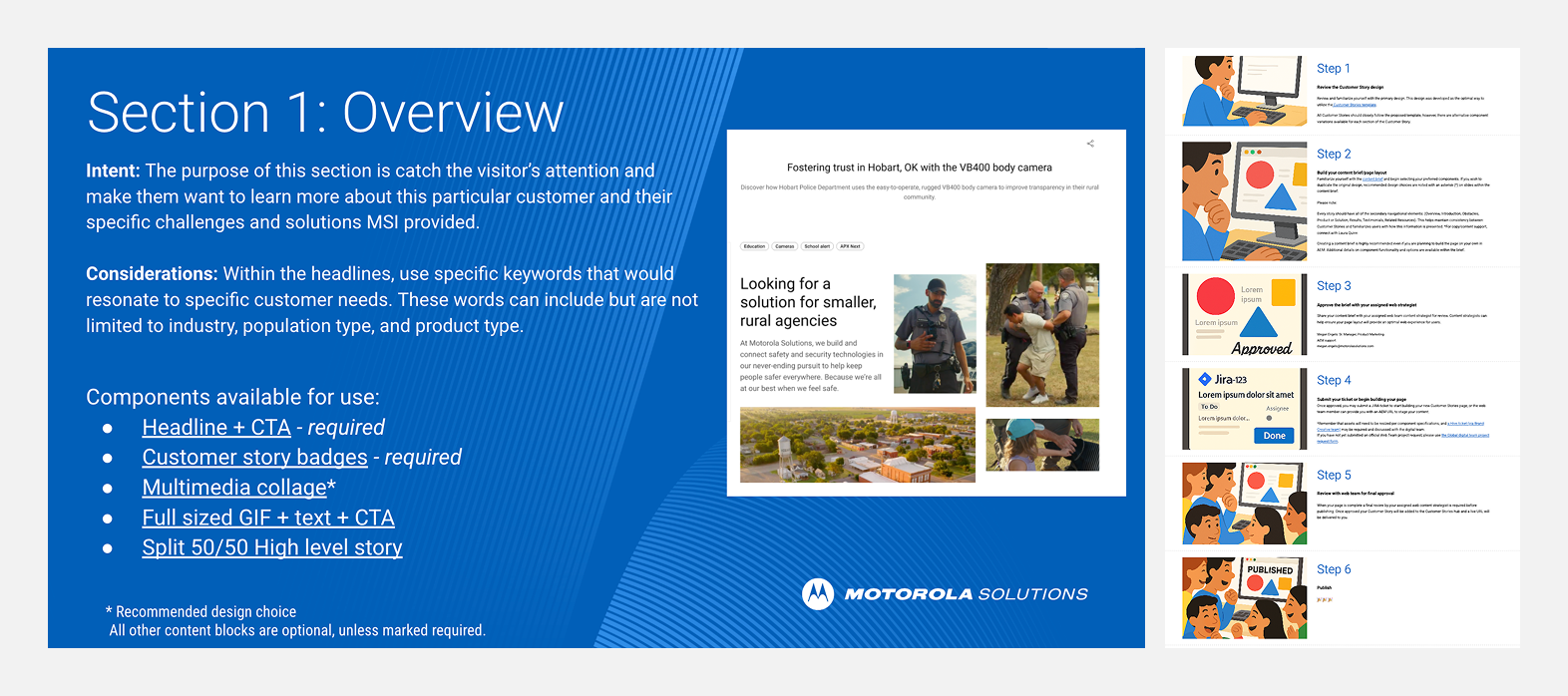
Implementation
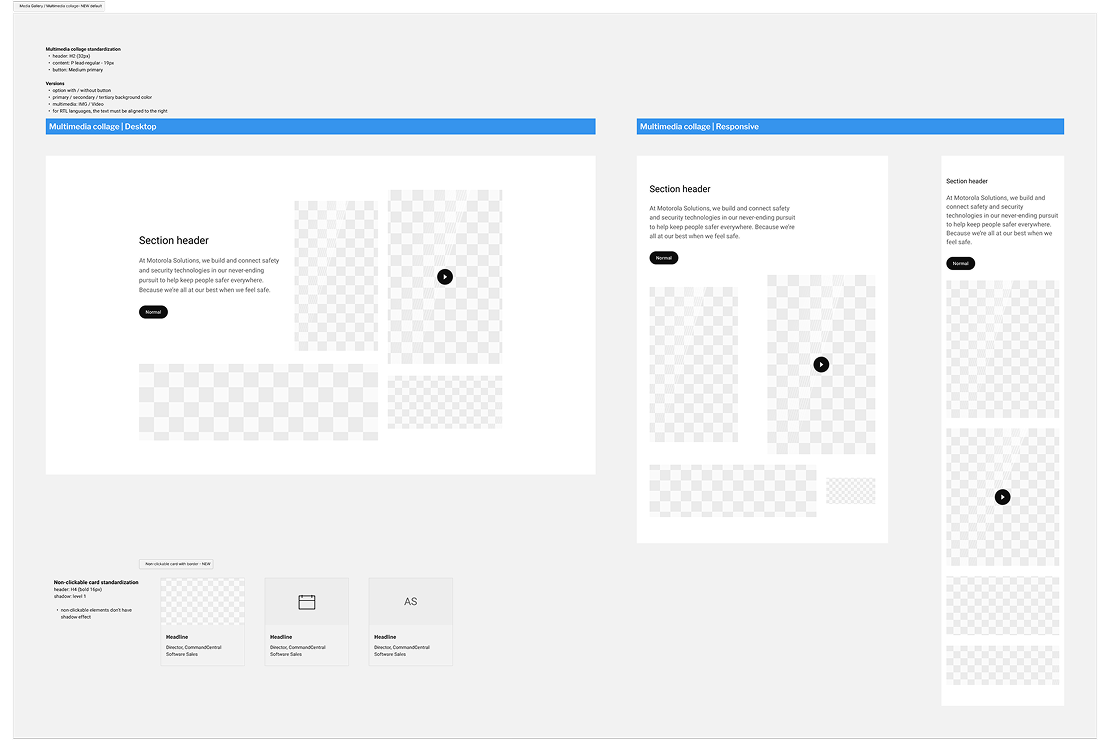
I partnered closely with Engineering to design a modular, CMS-friendly (AEM) template, using existing design system components to speed implementation and adoption.
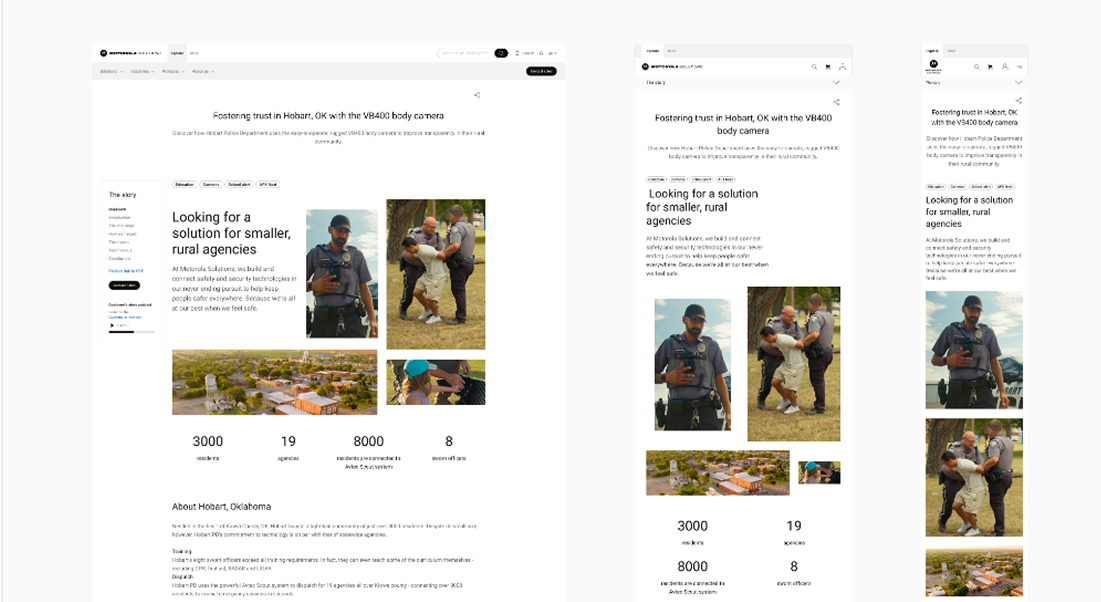
Impact
The new architecture successfully shortened the path to conversion, growing traffic from 4 to over 4,000 visitors and doubling session duration. I designed a system that bridges storytelling and sales, allowing our teams to publish 43% faster while maintaining a consistent global brand voice.

“We have officially proven that our traffic is high-quality. Moving from zero to 16 conversions shows that visitors are now taking real action on our site.”
— Product Owner
Next steps
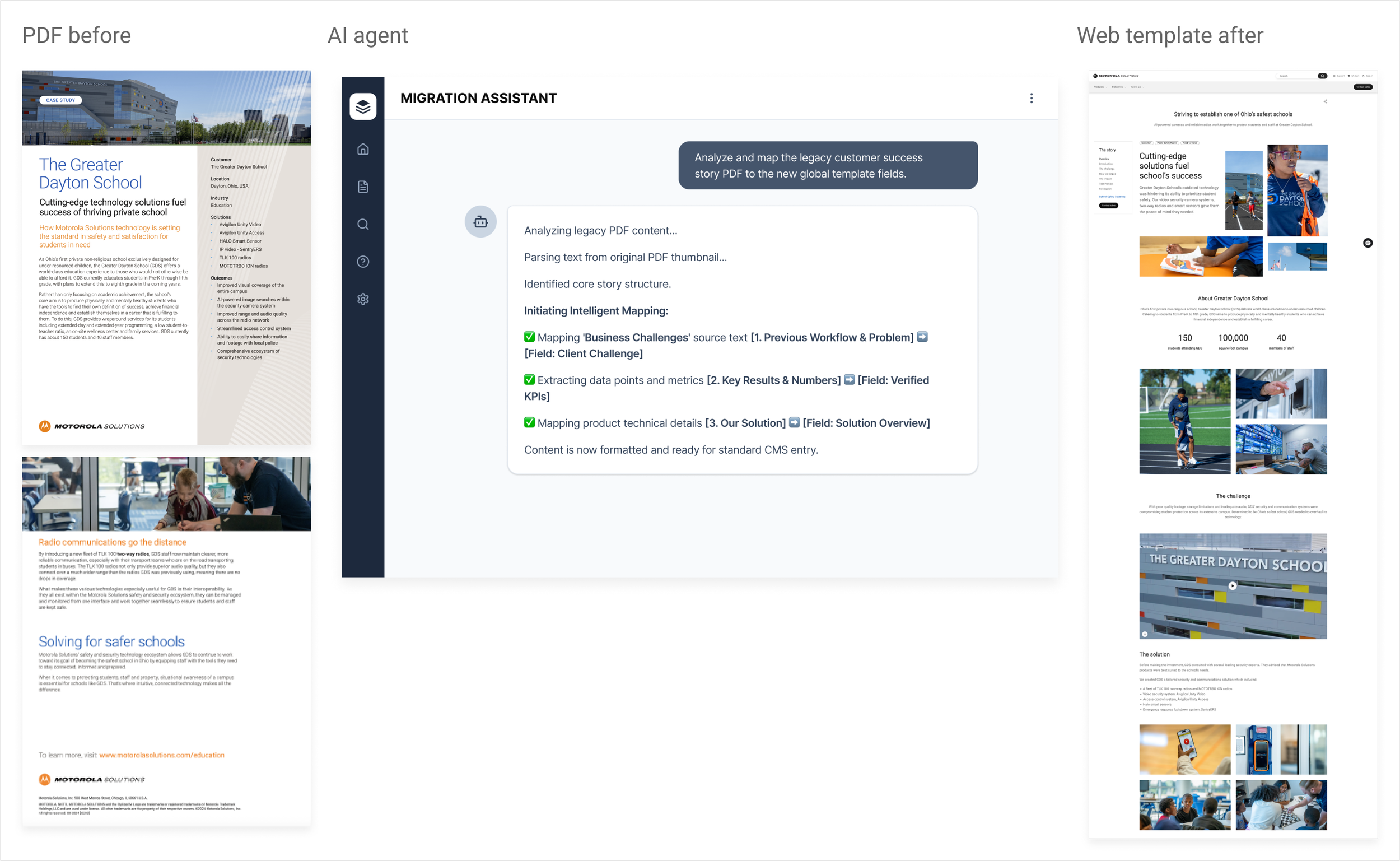
As the volume of stories grew and the layout continued to evolve, I recommended using AI to help migrate our old stories into the new format, reducing manual work. To keep the global experience seamless, I also proposed search updates that prevent users from accidentally 'jumping' to the wrong regional site while exploring new content.
Lessons learned
What I learned from this project is the importance of designing for both the reader and the writer. By creating a clear playbook and vetting ideas early with engineering, I ensured the system was as easy to maintain as it was to navigate.