Building a mobile product for public safety
Context:
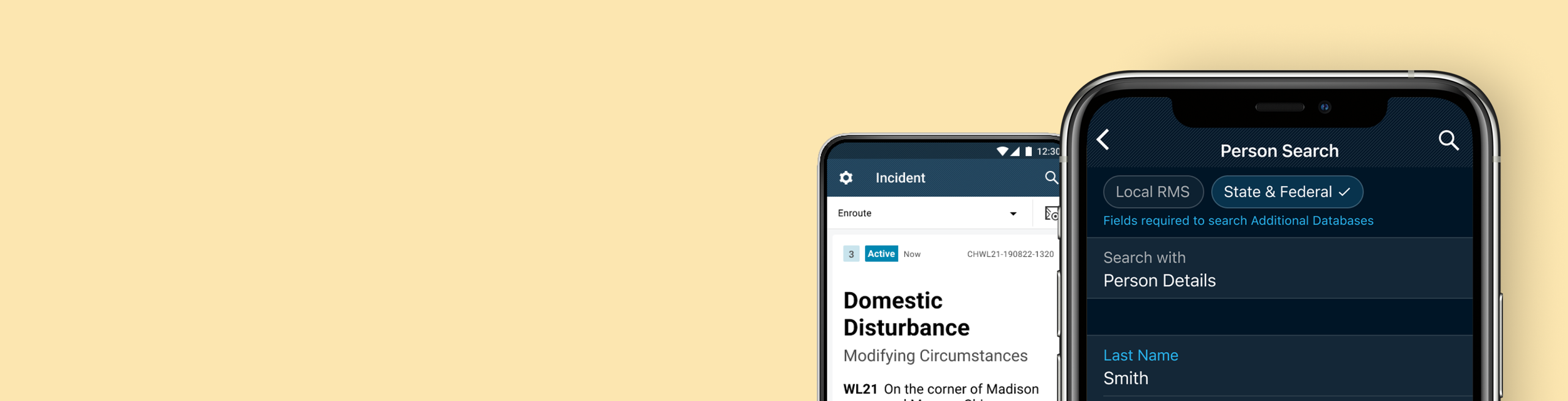
CommandCentral Responder is a public safety mobile app for patrol officers. It manages incidents, creates records and citations digitally, and searches local, state, and national databases. It replaced the paper an officer used to carry and the trip to the station that followed every shift.
Role
Product designer
Core focus
Interaction design, Design system, Cross-platform specification
Stakeholders
Product management, iOS and Android engineering, Design system team
Challenge
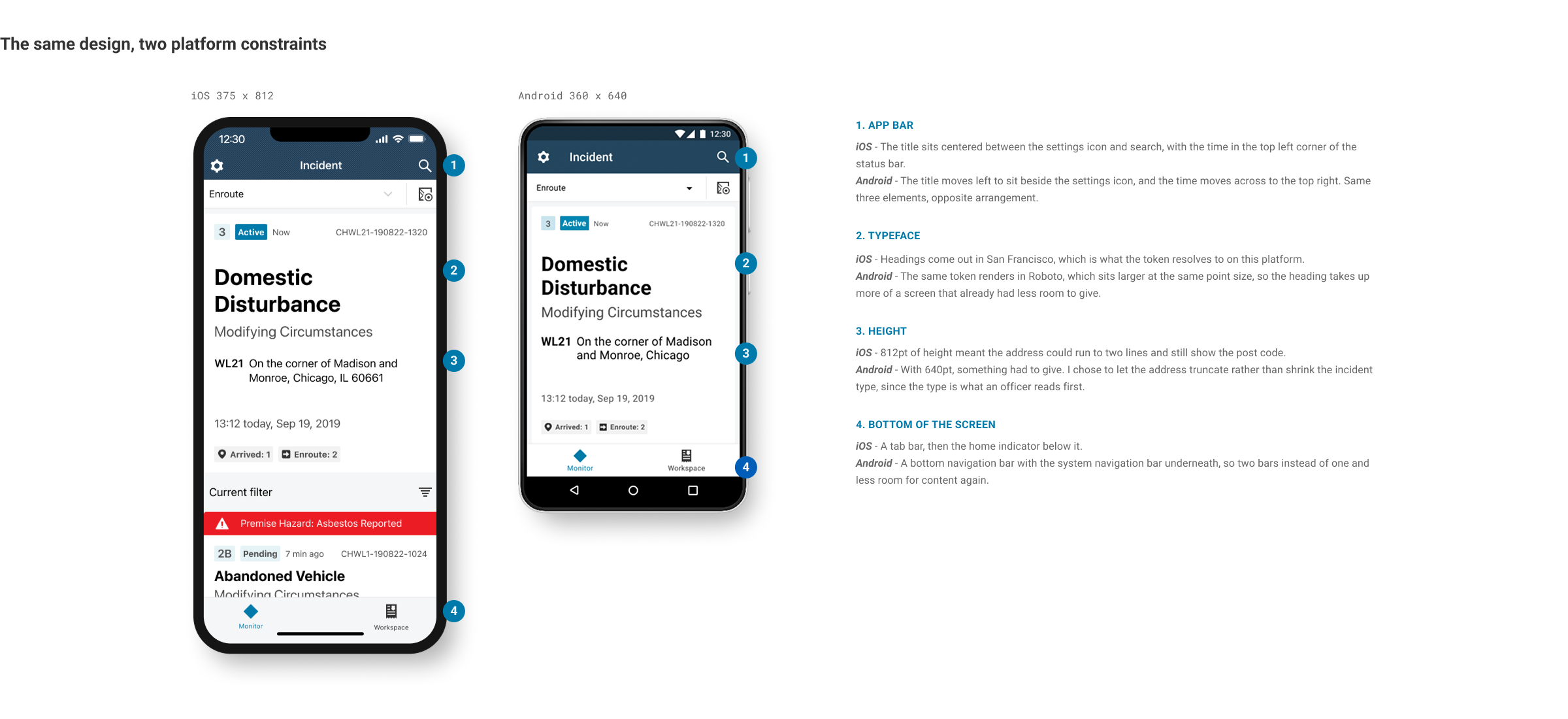
I was responsible for how this product resolved on two platforms at once, with a team split across time zones on an agile cadence. Requirements arrived as dense technical and legal constraints, not user needs. And every screen had to stay readable for an officer at night, under stress, eyes moving between the phone and the person in front of them.
Discovery
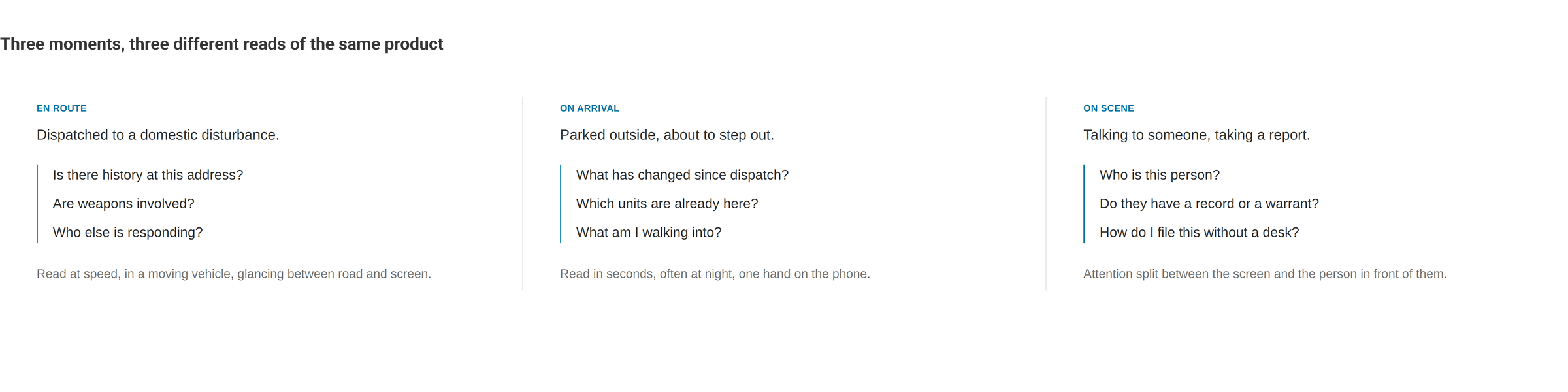
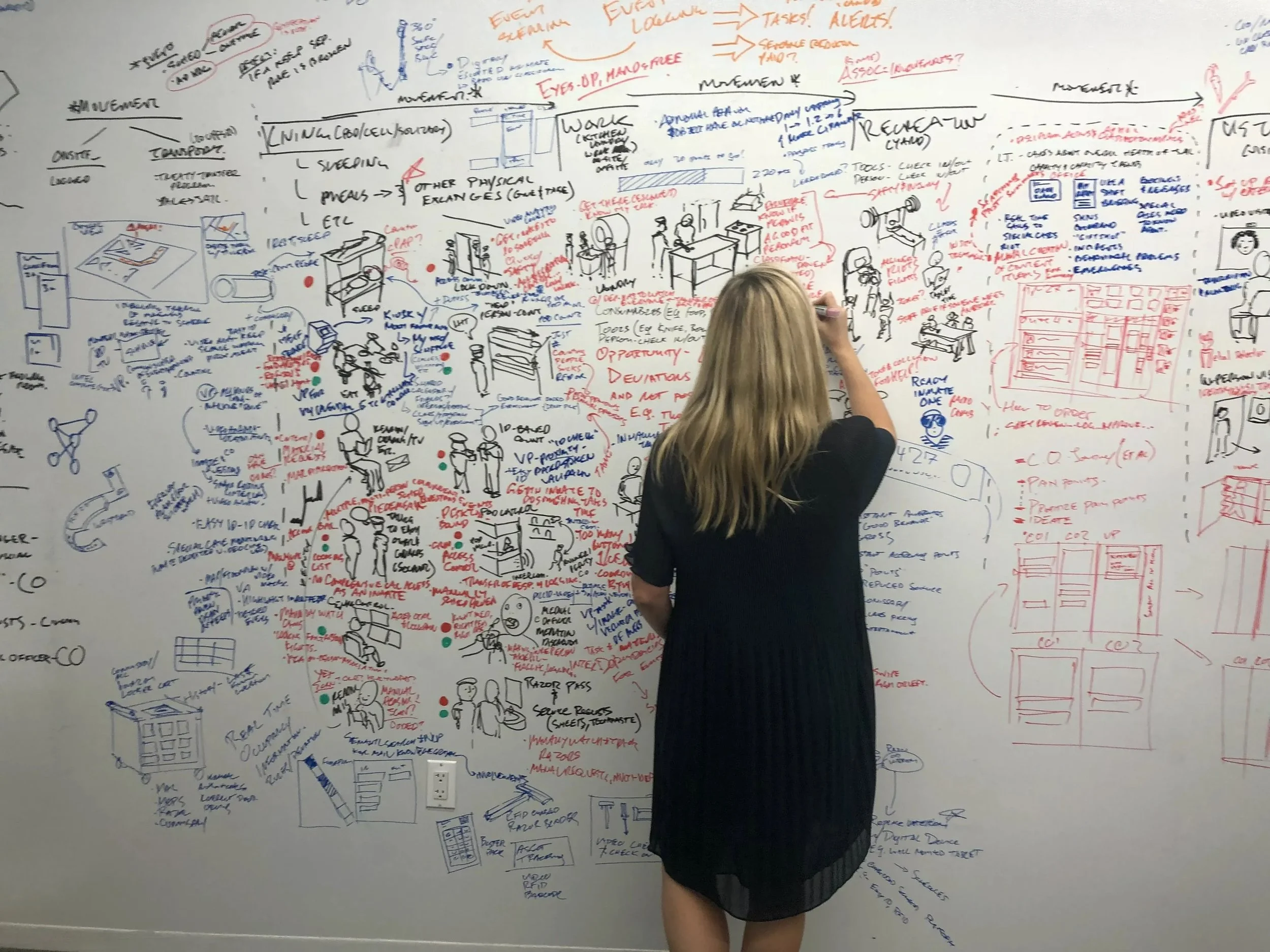
I defined product intent and critiqued concepts before any pixels were set. The question I kept asking was what decision each screen supported, not what it contained. Three moments defined the product: triaging incidents mid-shift, searching a person during a stop, filing a citation before memory fades. Same interface, three different cognitive loads.
Analysis
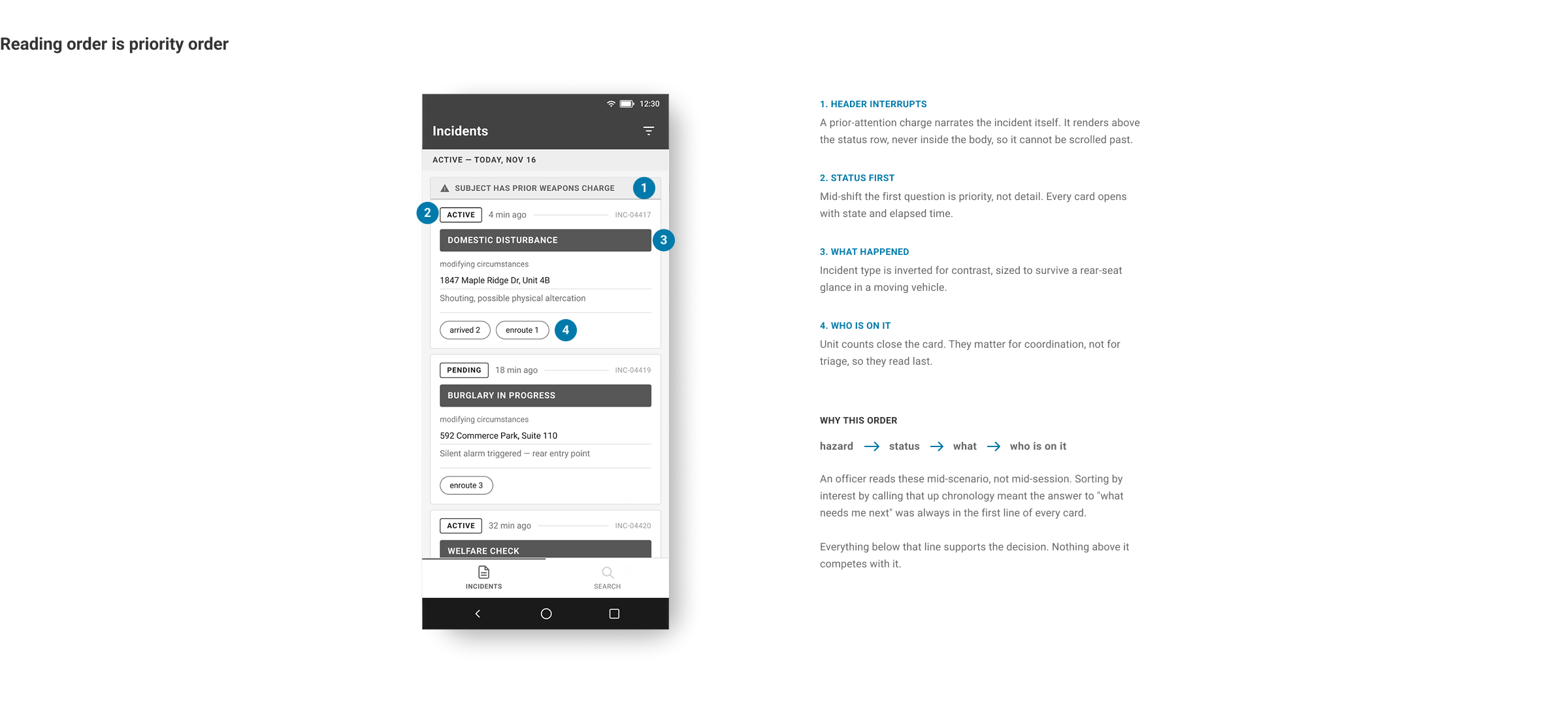
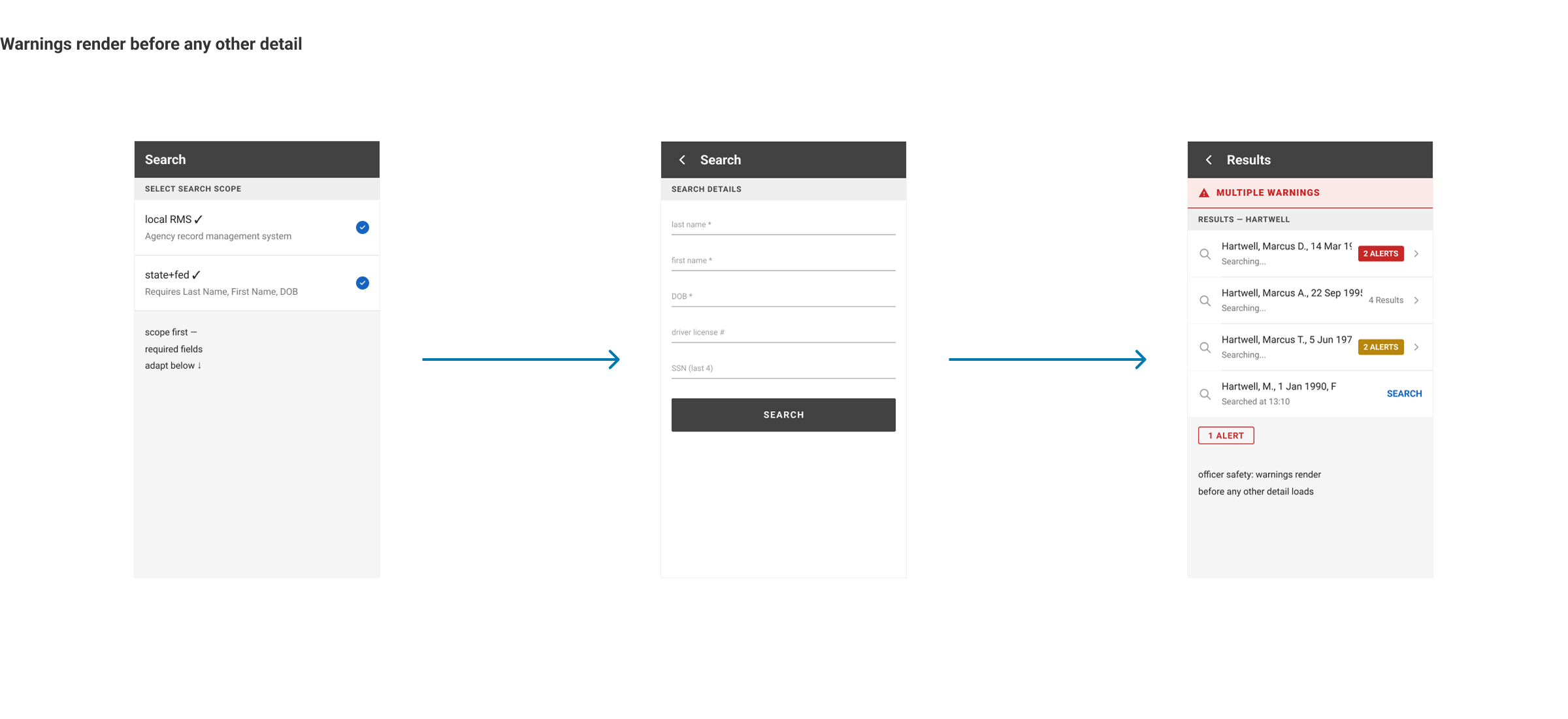
Officers read these screens in seconds, not minutes. That ruled out designs that required scanning and made hierarchy the primary tool rather than a finishing step. It also meant states had to be explicit. An officer should never wonder whether a citation was filed or whether a warning existed.
Ideation
Incident cards lead with state: stacked, pending, active. Reading order became priority order, and hazard banners interrupt it on purpose. Person search returns local, state, and federal results in one flow. Required fields adapt to the scope selected, and alerts render before any other detail.
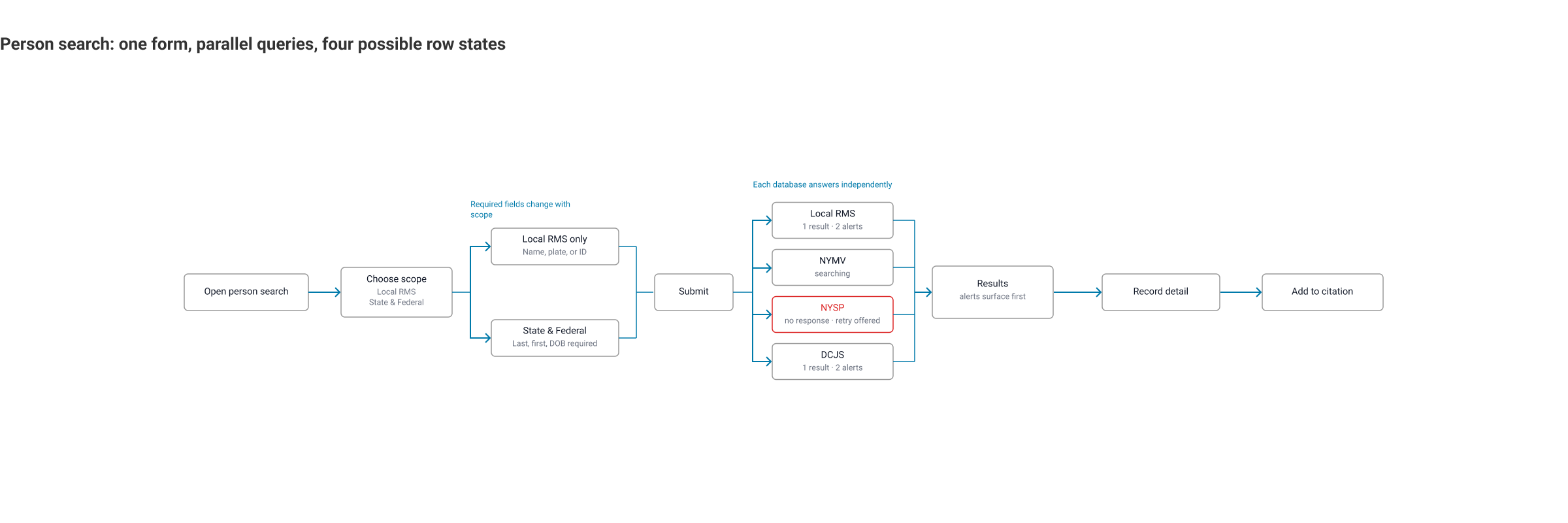
Here is how those states appear in the flow.
Design
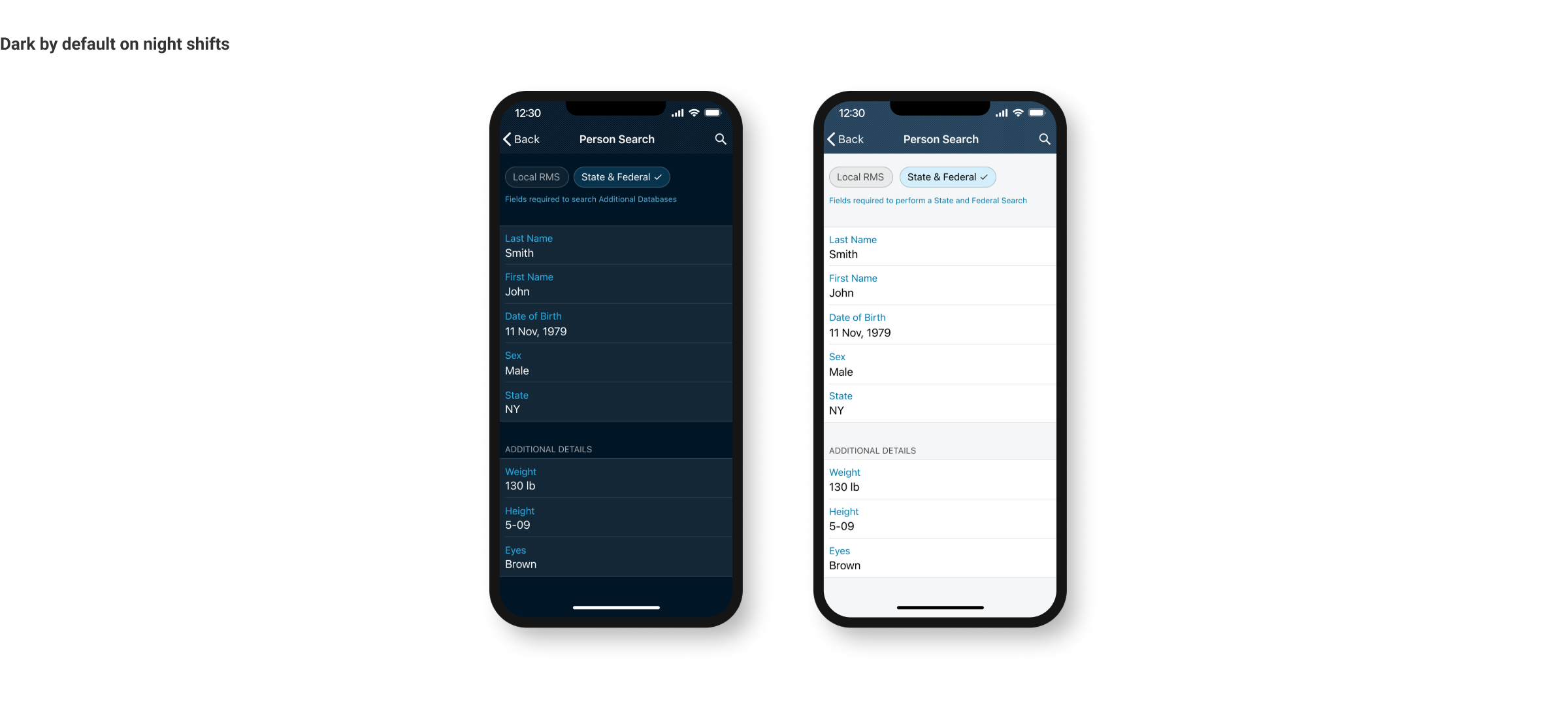
I resolved the flows into Cobalt, Motorola's design language, and finalized light and dark standards for the app suite. Officers preferred dark mode on night shifts: a bright screen in a parked vehicle is both harder on the eyes and more visible from outside it.
Systems
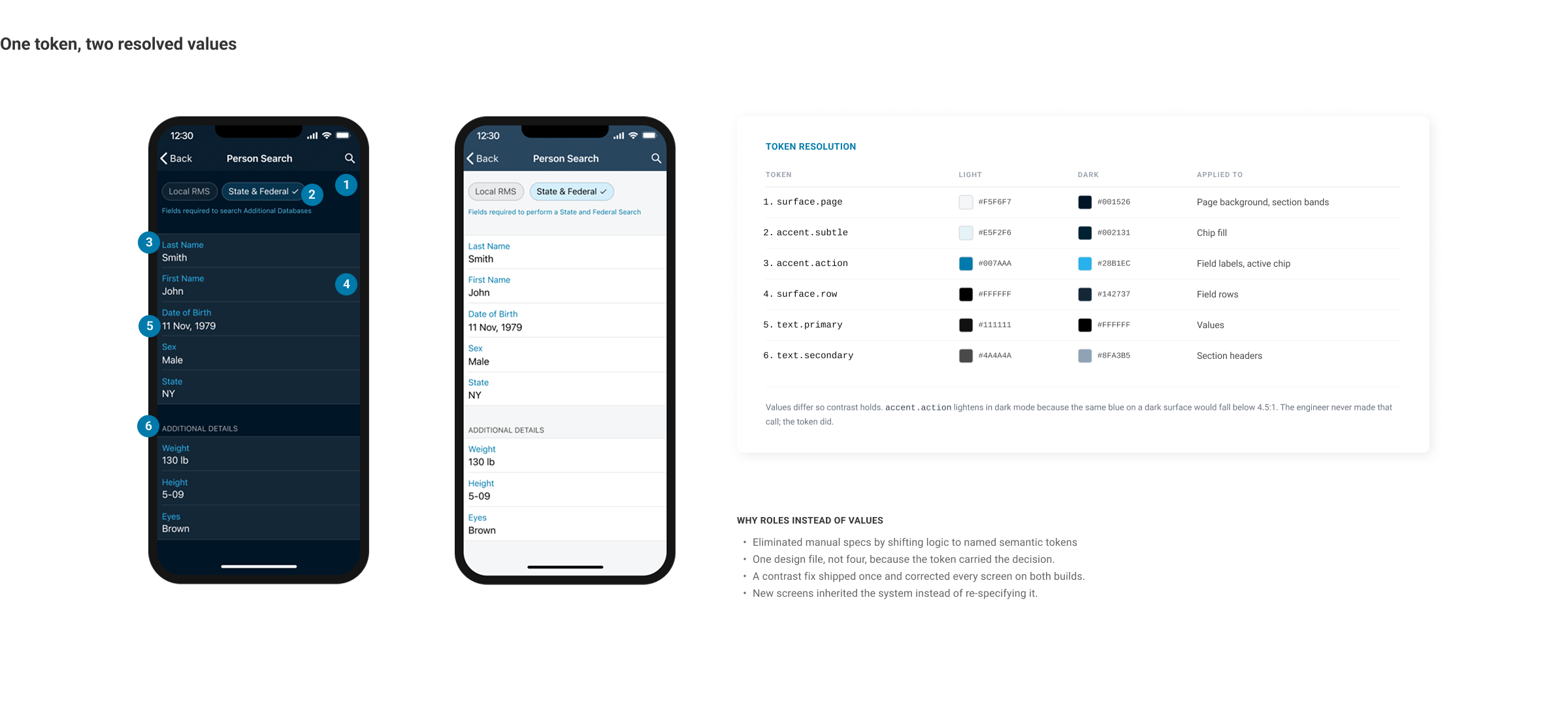
Two platforms and two color modes meant four possible values for every element. Rather than maintain four sets of screens, I gave engineers roles instead of values: surface.page, text.primary, accent.action. One token name resolved correctly in every combination, which is how contrast was maintained in dark mode without a second design file.
Implementation
I merged iOS and Material interaction patterns with Cobalt so the app felt native on each device while keeping one mental model. Error handling stayed inline rather than modal, because an interruption at the wrong moment costs more than a keystroke.
Handoff
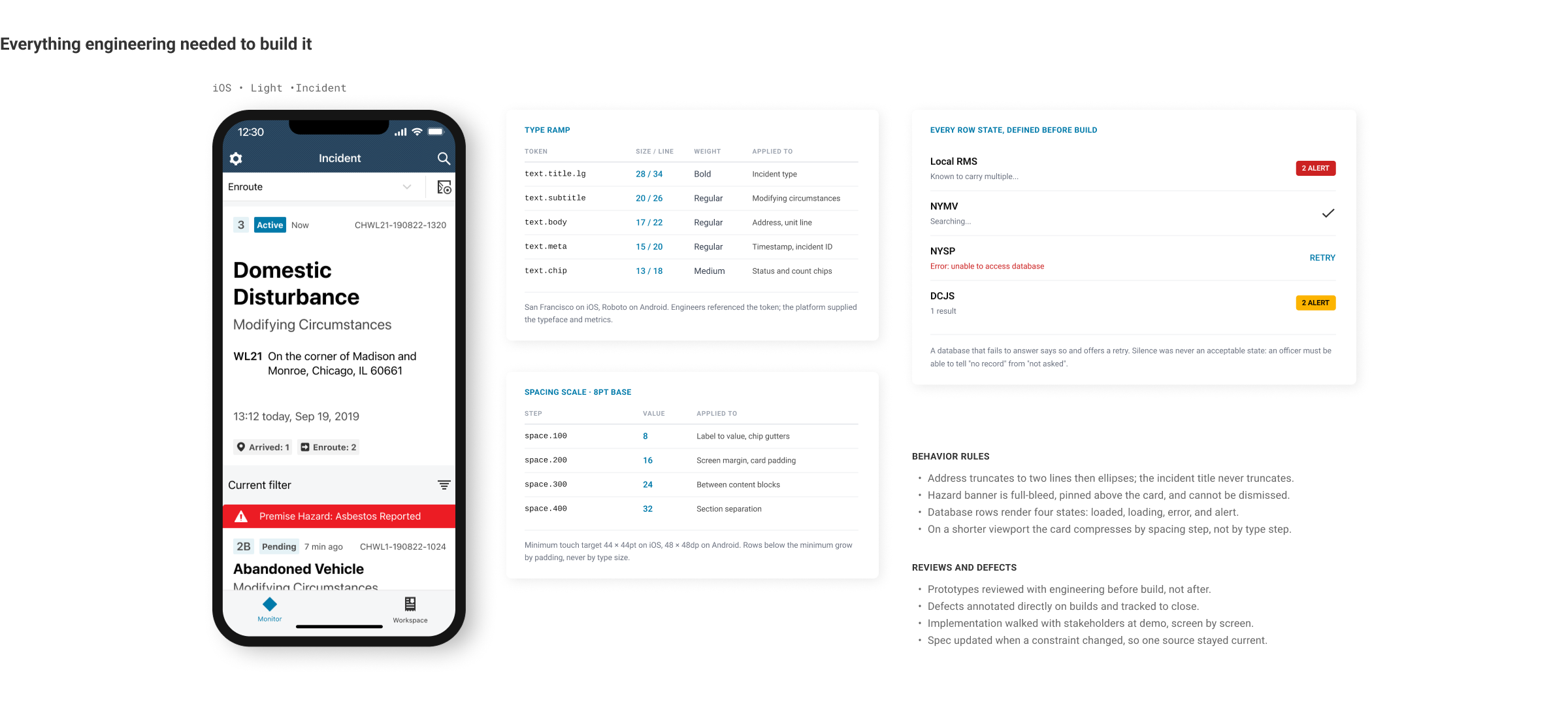
I specified redlines for engineering: spacing on an 8pt grid, a defined type ramp, touch target minimums, and every state a row could enter. A database that failed to respond showed an error and a retry rather than an empty result. I reviewed prototypes with engineers before build, annotated defects on real builds, and walked implementation with stakeholders at demos.
Results
Motorola's research found officers spend up to 30% of their time on paperwork at a desk. Responder moves searches, evidence, and citations to the scene, so the trip back to the station disappears. The app ships with CommandCentral deployments and remains live on both app stores. Patterns I contributed to Cobalt cut design iteration time by 40% for the teams that followed.

Next steps
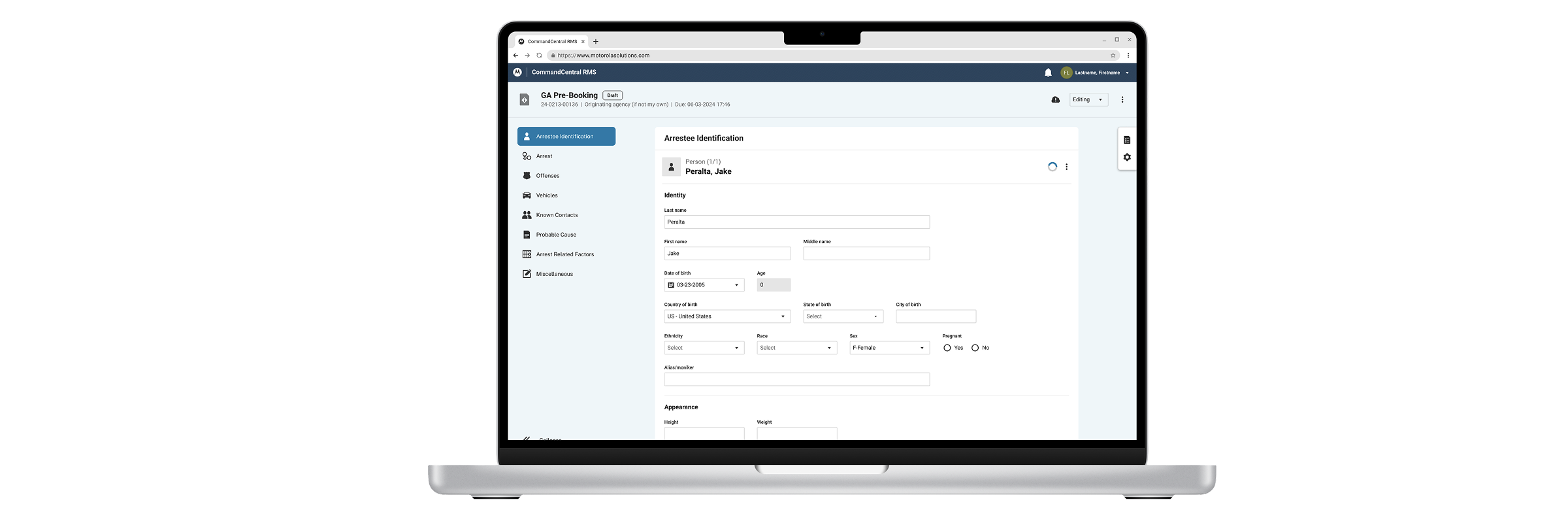
Responder led naturally into CommandCentral Jail, the corrections side of the same suite. The two systems had existed separately for years: an officer made an arrest in the field, and the jail retyped the same details by hand at intake. My team and I connected them, so the booking queue fills from the scene, and the officer at the jail knows who is arriving before the vehicle pulls in.
Lessons learned
Designing for officers taught me to think about the worst moment rather than the ideal one. What happens when the screen is read in three seconds, in bad light, by someone who is already stressed? It later became the basis for my patent on reducing cognitive load in time-critical interfaces.
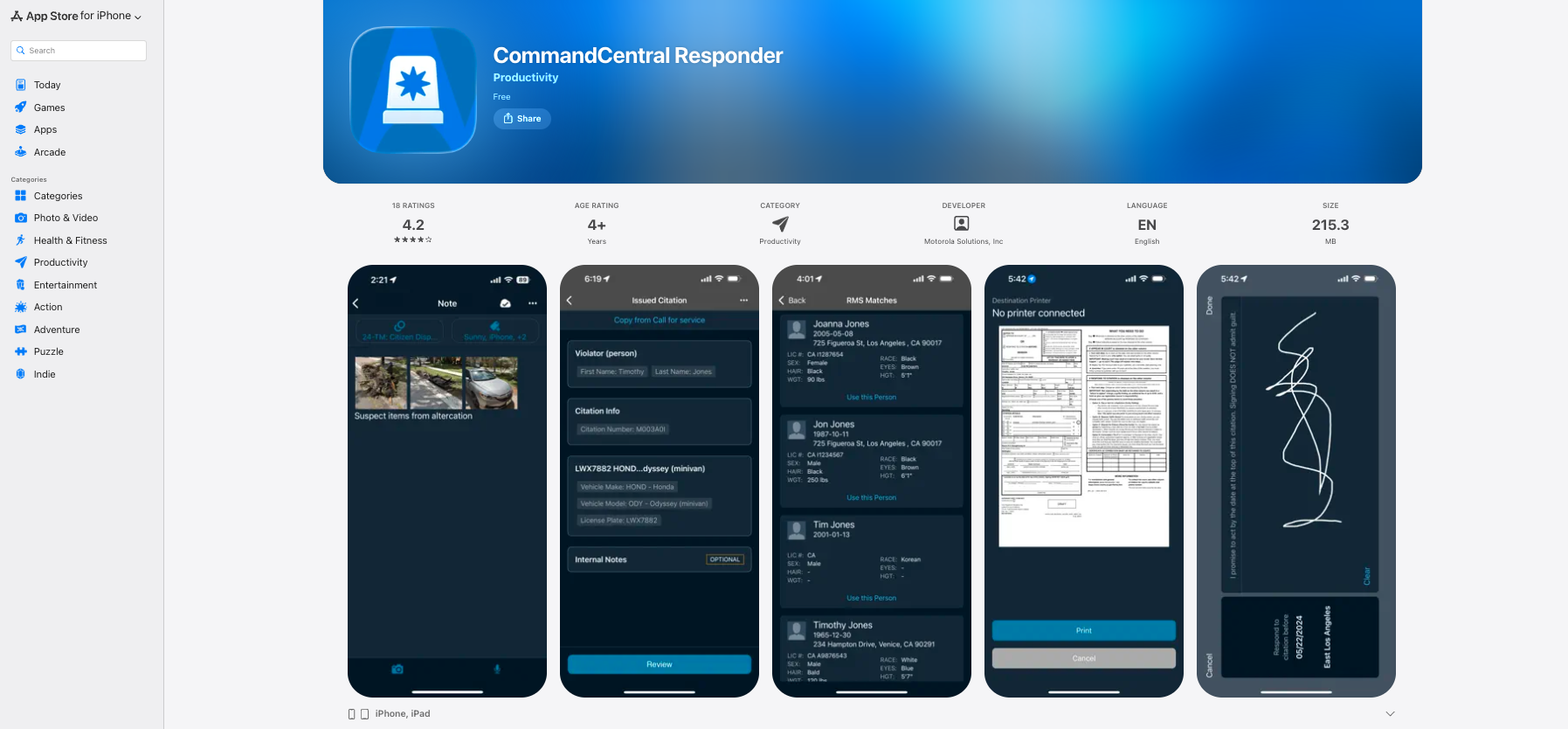
CommandCentral Responder live on the App Store
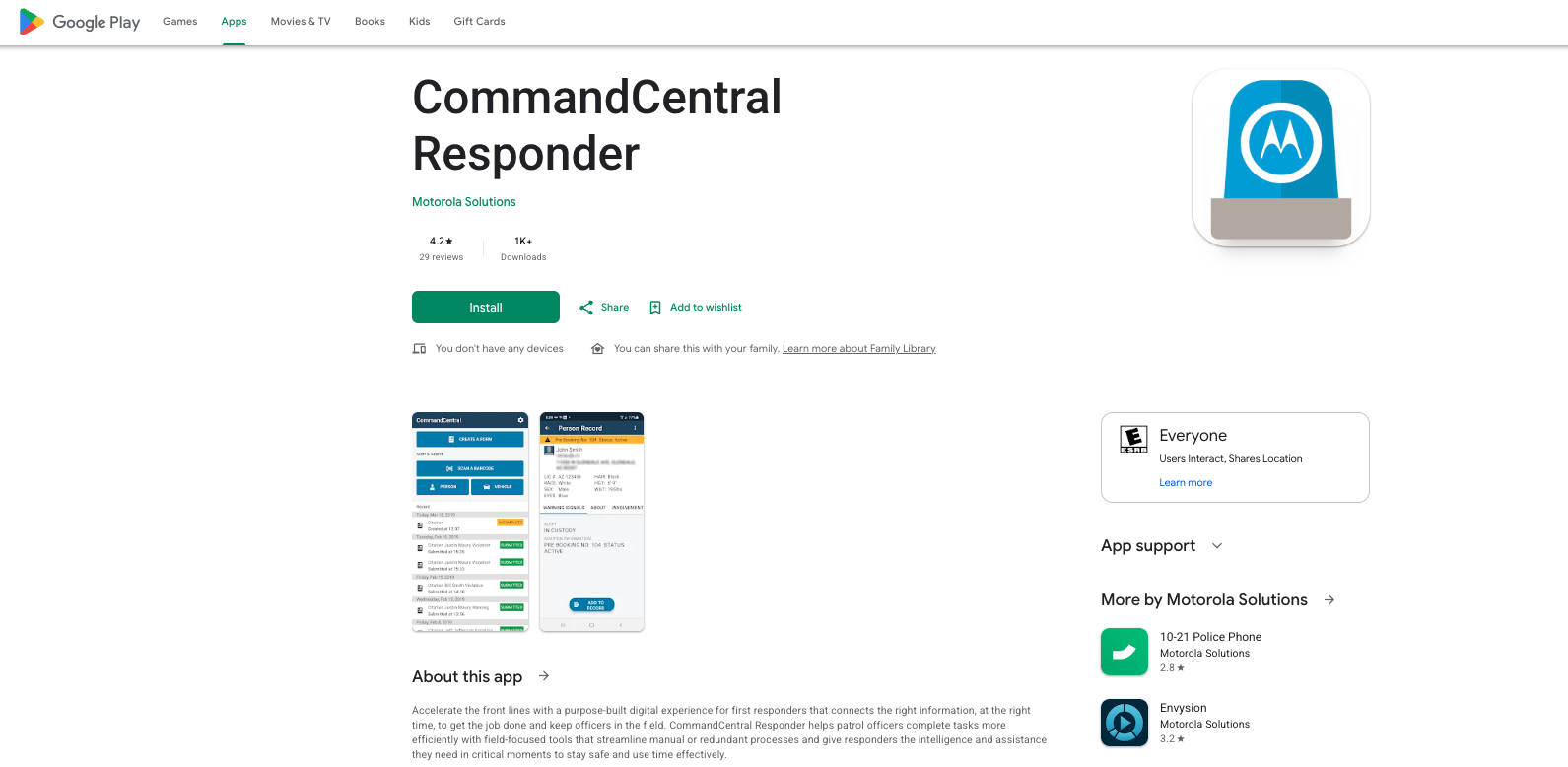
CommandCentral Responder live on Google Play